
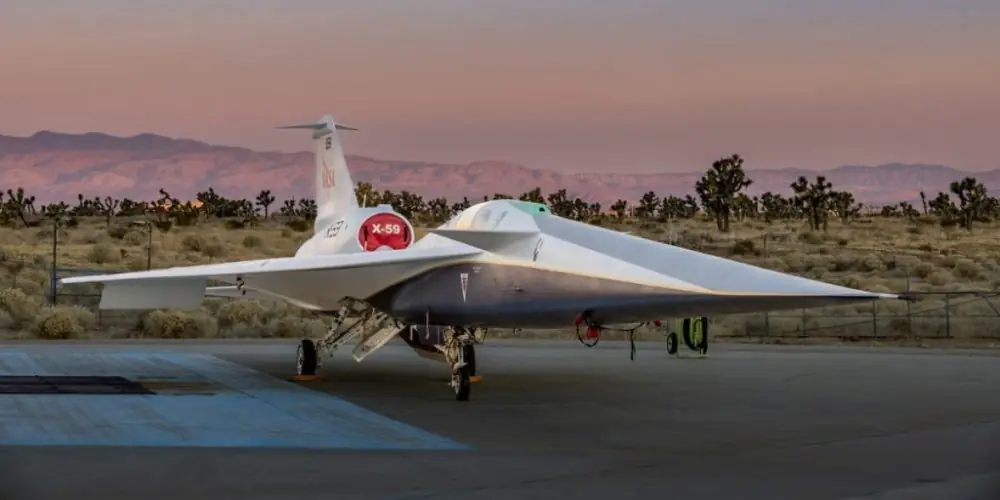
In the world of aerospace, NASA’s latest brainchild, the X-59, is setting a new paradigm. Developed in collaboration with Lockheed Martin, this cutting-edge aircraft aims to mitigate the deafening sonic boom of supersonic travel to a mere “sonic thump.”
However, this endeavor is not just about breaking speed barriers. It is about redefining the very nature of sound in aviation.
Unveiling the Future: The X-59’s Grand Debut
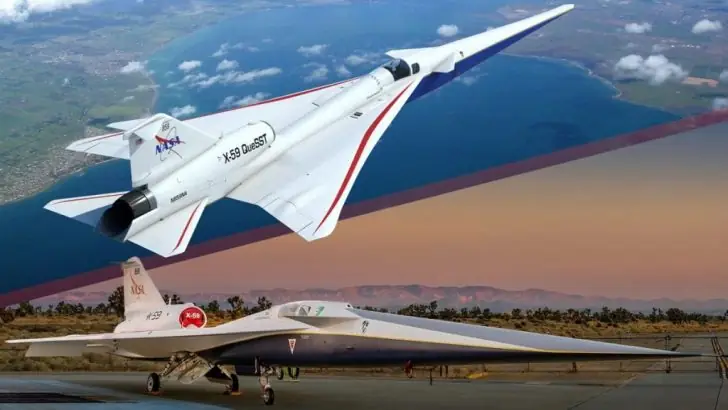
On a momentous day in January, NASA introduced the world to the X-59, an aircraft that could change the face of aviation. With an inaugural flight planned for later in the year, the X-59 is poised to embark on a journey of discovery, potentially reshaping the future of commercial supersonic flight.
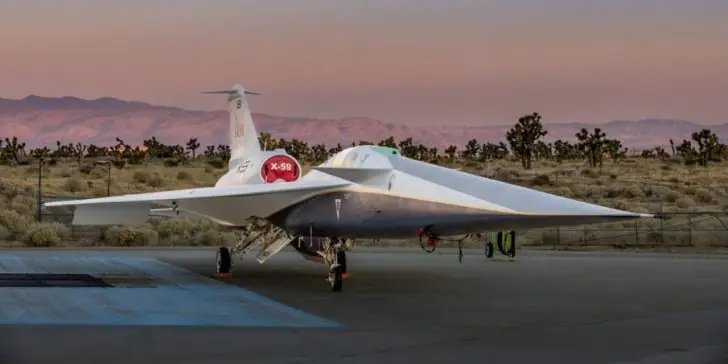
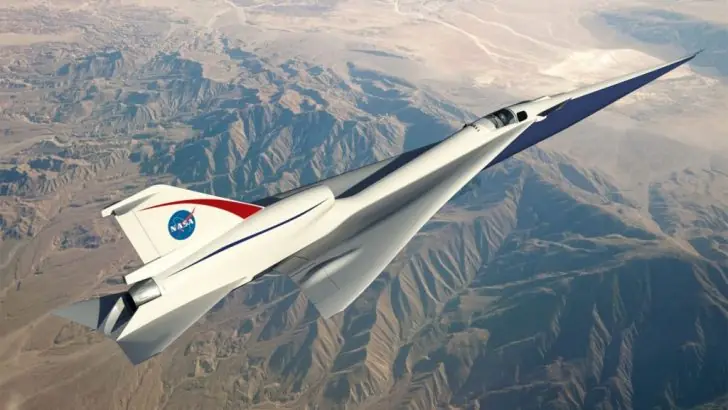
The X-59, a product of years of development since 2016, is an embodiment of aerospace innovation. Spanning just shy of 100 feet, its sleek, elongated form is a strategic design to minimize the merging of shock waves, thereby softening the harshness of sonic booms. Capable of reaching speeds up to 925 mph (Mach 1.4), the aircraft promises to marry velocity with reduced noise impact.
Testing the Waters: The Sonic Thump Experiment
Before it can soar the skies, the X-59 must prove its mettle through comprehensive system tests, engine assessments, and taxi trials. The ultimate test, however, is societal acceptance.
Public approval of the noise level could be a watershed moment, potentially influencing policy changes regarding supersonic flight over land.
The Quest for Quiet: Quesst’s Role
Central to this ambitious project is NASA’s Quesst mission. More than just an experiment in speed, Quesst represents a holistic approach to integrating high-velocity travel with minimal acoustic disruption. The mission is a testament to NASA’s commitment to advancing aviation technology while being cognizant of environmental and social impacts.
The X-59 stands as a beacon of modern aviation technology. Its construction involves cutting-edge materials and innovative design elements, all geared towards noise reduction without compromising performance. The aircraft’s unique shape, while essential for noise mitigation, also poses challenges in flight dynamics, ingeniously addressed by NASA and Lockheed Martin’s engineers.
Envisioning a Faster, Quieter World
The success of the X-59 could usher in a new era in air travel. Imagine traversing continents in hours without the sonic disruption that has long been a barrier.
Thus, the X-59 is not just an aircraft. It is a symbol of a future where speed and serenity coalesce, making the world more accessible while maintaining peace for those on the ground.
Summing Up
NASA’s X-59 represents a bold leap forward in the pursuit of harmonizing speed with silence. As it gears up for its first flight, the aircraft stands as a beacon of hope for a future where faster travel does not come at the cost of tranquility.
So, the X-59’s journey is more than a series of tests. It is a path towards a new frontier in aviation, where the sky’s embrace is both swift and soft.