Humanity has come a long way in terms of technological advancements over the last century. Still, there is one long-held question that we haven’t found definitive answers to: is there life in other corners of the Universe beyond our own planet?
The recent findings of a team of scientists from the United States and the United Kingdom might get us closer to finally finding out the answer to this question.
Strong Evidence
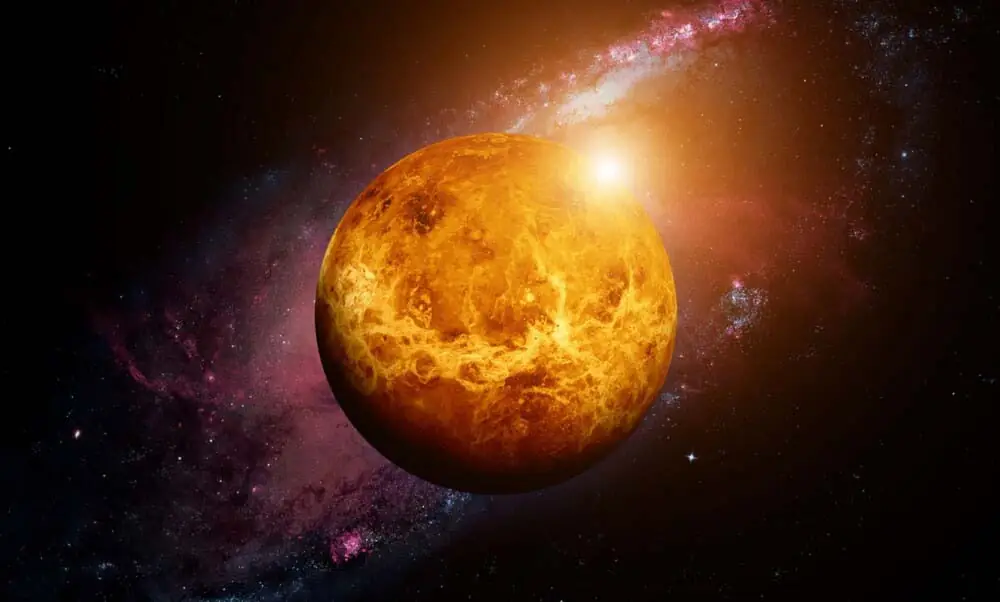
Aphelleon/Shutterstock — Much of Venus’ atmosphere is composed of carbon dioxide and clouds of sulfuric acid
When writers and filmmakers depict alien life, they usually have them originate from galaxies far away. As it turns out, they didn’t have to go far to find the potential for extraterrestrial life forms.
Our neighboring planet Venus has been found to have a gas called phosphine in its atmosphere. For the unfamiliar, phosphine is a rare type of toxic gas that can also be found on Earth.
This foul-smelling substance is typically found in pond slime or penguins’ droppings, which means that the gas is produced by living organisms.
Further Confirmation

Except for industrial processes, scientists have only observed phosphine from anaerobic organisms, which are life forms that don’t require oxygen to grow. That said, the team of scientists that found phosphine in Venus believes that the gas was emitted by living organisms on the planet.
Due to the planet’s harsh atmosphere, the gas was actually found 35 miles above its actual surface. Thus, more confirmation might be needed to ensure that the phosphine discovered near Venus came from its atmosphere.
For that to happen, a spacecraft needs to go on a mission to Venus and retrieve samples of its atmosphere. Should the scientists prove that there is indeed life on the planet, the next step is finding out whether its life forms share a similar DNA with those found on Earth.
Sister Planet
The possibility of life on Venus also gives new meaning to it being dubbed as the Earth’s ‘sister planet’.
Humans have long observed and studied Venus, one of the planets visible in Earth’s sky. Explorers have also found that it is almost the same radius and mass as our planet, making it an interesting target for discovering life beyond Earth.
However, it’s worth noting that its closer location to the sun made its environment significantly harsher compared to Earth. This discovery dampened hopes of there being life on Venus in the ‘60s.