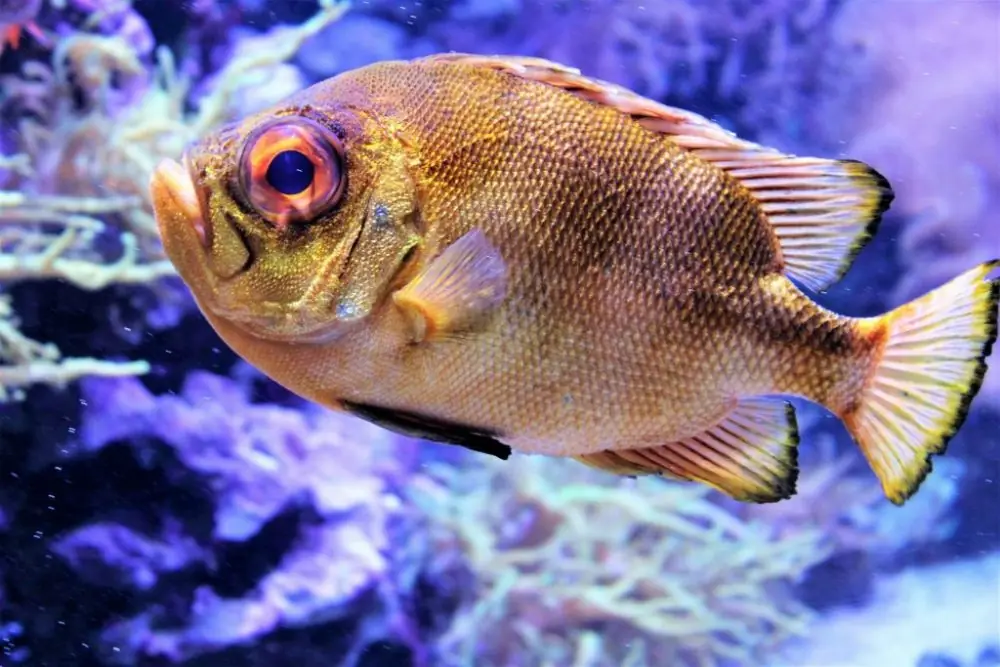
Fish are not just mindless swimmers. They have sharper memories than you might think. A fascinating new study proves that fish can recognize and follow specific humans based on their diving gear.
Scientists at the Max Planck Institute for Animal Behavior (MPIAB) in Germany made this surprising discovery while observing sea bream and other species in the Mediterranean.
Fish Remember Who Feeds Them
Fish don’t treat all divers the same. If they have been fed by a specific person before, they remember and seek them out. Researchers at the Mediterranean station Stareso in Corsica noticed that fish would tail specific divers but ignore others.
However, this was not a one-time occurrence. A team led by researchers Katinka Soller and Maëlan Tomasek set up a series of experiments in which fish voluntarily participated. Soller, an experienced diver, started wearing a bright red vest while feeding them.
Over time, she removed the vest and any other distinguishing marks. Yet, the fish still followed her. They had memorized who provided food, proving their ability to recognize specific humans based on equipment details rather than facial features.
Sea Bream Are Smarter Than Expected
After just 12 days of training, about 20 fish were consistently following Soller on her dives. Sea bream, in particular, stood out for their curiosity and quick learning. The experiments, published in Biology Letters, revealed that the fish were paying attention to equipment details rather than faces.
To test this, Tomasek used gear that had subtle color differences from Soller’s. If he dived without feeding them, the fish quickly learned to ignore him. But when their gear was identical, the fish could no longer tell them apart. This proves that fish recognize patterns in their surroundings rather than specific human features.
Even Goldfish Recognize Their Owners
If you own a pet fish, you might have noticed something similar. Some fish swim toward their owners but stay distant from strangers. Matthias Wiesensee, a member of a German aquarium association, confirms this is common among koi carp and goldfish.

Larger fish, like cichlids and discus, also show distinct reactions to familiar humans. They develop bonds with their regular caregivers and often appear wary of new faces. While this behavior has long been observed, scientific studies on fish recognition remain rare.
However, previous research on archerfish showed they could recognize human faces in laboratory settings, adding another layer of evidence to this fascinating ability.
What This Means for Our Understanding of Fish
For years, fish have been underestimated. People often assume they lack intelligence or memory. This study challenges that belief, proving that fish are not only capable of recognizing humans but also making decisions based on past experiences. They remember who treats them well and who doesn’t.
This research also has implications for marine conservation and fishing practices. If fish can recognize and react to specific humans, it raises ethical questions about their treatment in the wild and in captivity. Understanding their memory and learning abilities might help create better conservation strategies, ensuring their habitats are protected.
Scientists are only scratching the surface of what fish can do. This study suggests that their cognitive abilities go far beyond what was previously thought. More research is needed to determine how long fish retain memories and how they differentiate between humans over extended periods.