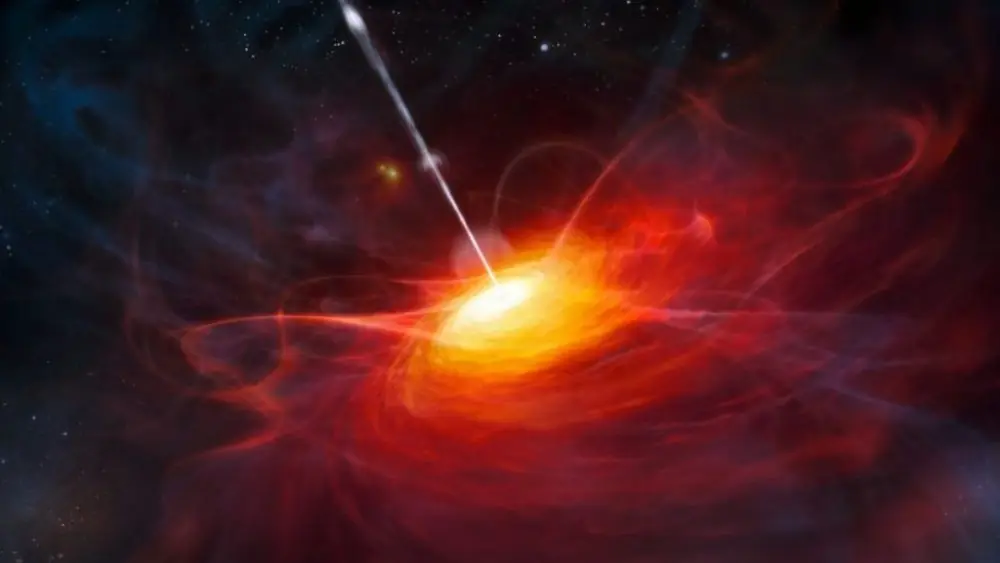
Black holes are some of the most mysterious and extreme objects in the universe. For years, astronomers thought the biggest ones, called ‘supermassive’ black holes, formed super fast in the early universe. But now, a new discovery says we may have been wrong about just how massive they really are.
A team of scientists from the University of Southampton and the Max Planck Institute studied a distant quasar, J0529-4351, over 12 billion light-years away. Using a powerful instrument called GRAVITY+ on the Very Large Telescope, they measured the black hole’s mass more accurately than ever before.
And guess what? It was much smaller than expected. In fact, only about one-tenth the size that earlier methods suggested.
A Cosmic Optical Illusion
Previous estimates used scaling rules based on black holes closer to us. But the early universe is a wild place. Black holes back then were gobbling up gas at a crazy rate. That feeding frenzy created intense radiation, which blasted gas away like a high-powered hairdryer.
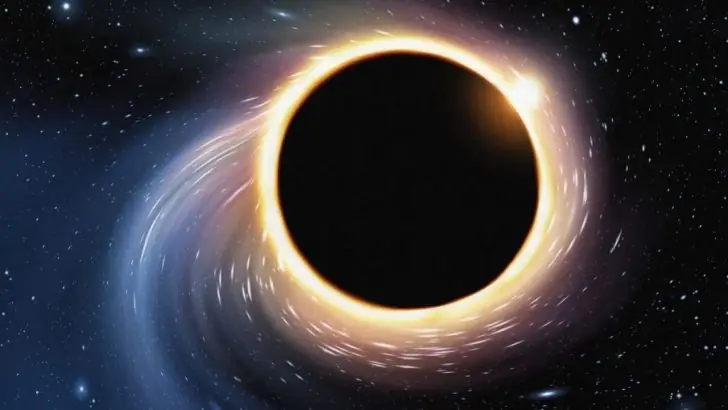
This mess made the older measuring tools think the black holes were heavier than they really were.
Imagine trying to weigh someone during a tornado. The swirling winds throw everything off. That is basically what scientists were doing with these early black holes. The new method, however, tracks how gas spirals around the black hole, giving a more accurate reading.
Rethinking Black Hole Growth
This isn’t just about numbers. It changes how we think black holes and galaxies formed together. Before, the idea that black holes could get so big so fast didn’t make much sense. There wasn’t enough time after the Big Bang for them to grow that much, not with the physics we know.
But if they were smaller all along, it solves part of the puzzle. The growth doesn’t have to be as fast or as wild. Scientists still think they grew quickly, but now the numbers look more realistic. It takes a big weight off the theory.
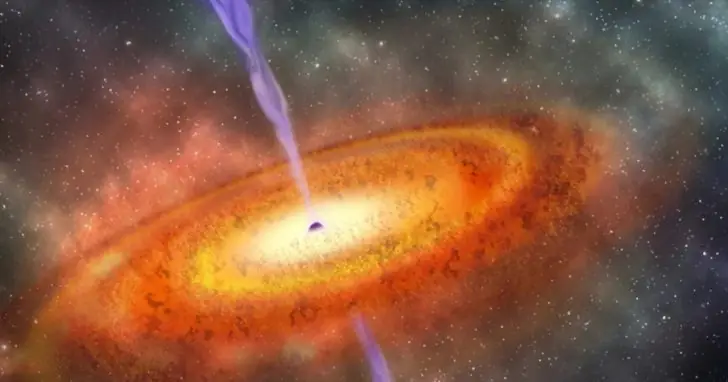
That could now play a bigger role in explaining how these monsters got their size.
This Marks a Win for New Tech
None of this would be possible without new tools. The GRAVITY+ instrument gave scientists a much clearer view of the black hole’s surroundings. It doesn’t just look at the light. It watches the movement of gas as it spins inward. That is a game-changer!
This kind of tech is opening up a new era in astronomy. Instead of relying on guesswork and indirect methods, we are now getting direct views of things that used to be totally out of reach. And the results are already shaking up our ideas about the early universe.
If more early black holes turn out to be smaller than expected, we will need to revise our models of cosmic history. That includes how galaxies formed, how fast stars were born, and how matter behaved in the early days of the universe.
Scientists have long linked the growth of galaxies with the black holes at their centers. If those black holes were smaller, maybe the galaxies would also be different. Everything is connected, and one shift in the numbers can ripple across the entire model of how the universe evolved.