
In a recent groundbreaking study, scientists have unveiled a revolutionary artificial intelligence (AI) method that could potentially uncover traces of alien life on celestial bodies like Mars and Europa.
This cutting-edge technology boasts an impressive 90% accuracy rate in detecting past signs of life on Mars. The scientific community hailed this AI-based breakthrough as the “holy grail of astrobiology.” Published in the prestigious academic journal Proceedings of the National Academy of Sciences, this research promises to reshape our understanding of the cosmos.
Deciphering the Chemistry of Life
The heart of this AI-based method lies in its ability to distinguish biomolecules—molecules associated with the functioning of life, such as amino acids—from abiotic molecules, those devoid of any life-related characteristics. Amino acids, for instance, retain information about the chemical processes responsible for their formation, and this principle holds for potential alien life forms as well.

This groundbreaking technology equips AI with the power to scrutinize samples and discern the remains of life, such as leaves, hair, and ancient traces of life that geological processes like amber and coal have transformed. Moreover, it can differentiate between amino acids of biological origin and those created solely within a laboratory setting.
Study leader Robert Hazen elucidated, “We began with the idea that the chemistry of life differs fundamentally from that of the inanimate world; that there are ‘chemical rules of life’ that influence the diversity and distribution of biomolecules. If we could deduce those rules, we can use them to guide our efforts to model life’s origins or to detect subtle signs of life on other worlds.”
A Multifaceted Tool for Exploration
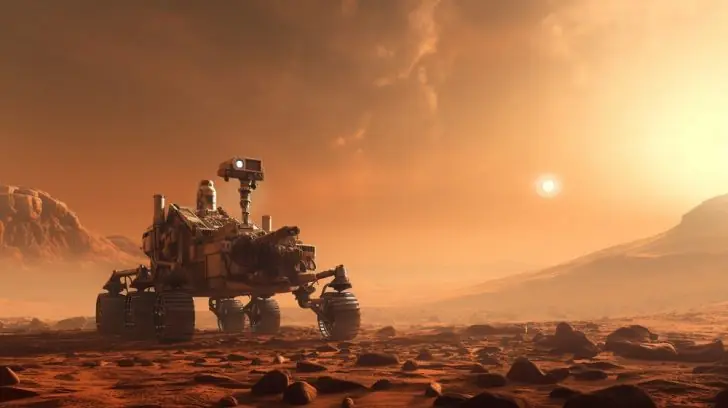
The potential applications of this AI tool extend far beyond extraterrestrial pursuits. It can be deployed to analyze enigmatic ancient rocks on Earth and samples collected by NASA’s Curiosity rover on Mars.

Yet, its most thrilling prospect lies in its capacity to explore other potentially habitable realms in the cosmos, such as the icy moons Europa and Enceladus. By attaching AI technology to space probes, scientists could delve into the mysteries of these distant worlds.
Continuing the Quest
The concept of detecting alien life through chemical analysis is not entirely novel. Avi Loeb, an Israeli-American astrophysicist and former head of Harvard University’s Astronomy Department, has been a prominent advocate for searching for evidence of intelligent alien life by identifying chemicals that could only be artificially manufactured.
Loeb’s perspective contends that while finding oxygen could have a natural explanation, compounds resembling those produced by coolants are undeniable indicators of intelligent life.
Loeb highlighted the significance of discovering compounds on other Earth-like planets as a potential indicator of intelligent life. He underscored our current technological capability to pursue such discoveries.
With the integration of AI technology, the quest for these distinctive compounds could potentially make significant strides forward. AI’s formidable analytical capabilities might offer new avenues for unraveling the enigma of extraterrestrial intelligence.