Did you know that your brain is completely unique?
No, seriously.
Your brain isn’t like ours or even anyone else’s. And we don’t mean that in an abstract or philosophical way. A few years ago, scientists discovered that the way your brain is wired is unique to you.
When it was undergoing development, the blueprint specified by your genes led to your brain having about the same organization as everyone else’s. However, what that genetic blueprint didn’t do was specify the exact connection patterns among all the neurons in your brain.
How Does This Work?
Random processes determined by external factors and stressors determine the wiring diagram for the network of cells in your brain. In layman’s terms, this is dependent upon how you interact with the world around you and how it interacts with you. The way your brain processes information is unique to you. Hence, neurobiologically speaking, everyone is truly unique.
Here’s the Problem, Though…
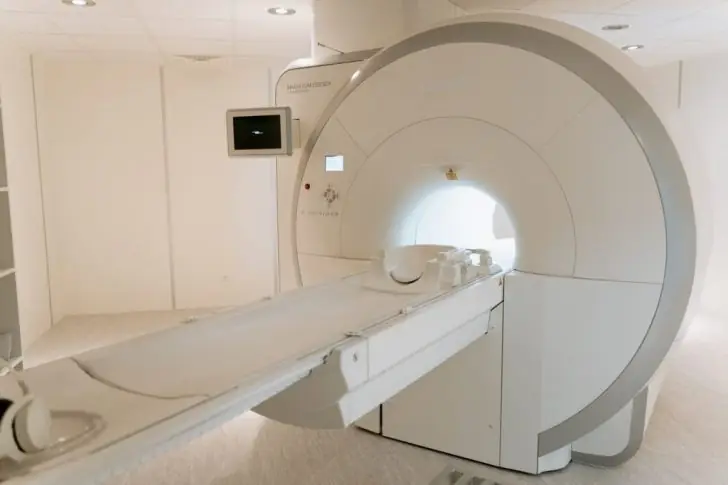
Neuroscientists are stuck in a rut because this discovery essentially states that no two brains are the same. While scientists could study your behavioral and cognitive functions using electroencephalography (EEG) and functional magnetic resonance imaging (fMRI) currently at science’s disposal, they can’t determine or study the fundamental neurobiology that’s responsible for making you the way you are.
That is until this latest technology revolutionized the field of neuroscience.
What Are Brain Organoids?
Brain organoids are self-organizing, three-dimensional, pin-sized structures made up of about 2.5 million neural cells. A study published in Nature Neuroscience suggests that understanding complex disorders might become simpler through a powerful tool as personalized brain organoids. Human stem cells are coaxed into three-dimensional blobs of brain cells, as they exhibited the ability to mimic brain cells when being studied.
Organoids Demystifying Disorders
For the study, researchers grew two different types of brain organoids: one from a healthy brain and the other from a brain belonging to individuals with Rett syndrome, a developmental disorder characterized by developmental lags, autism, and seizures.
While both organoids looked similar, the former produced electrical activity similar to a full-sized brain, coupled with coordinated firing of nerve cells. On the other hand, the other brain gave off signals that were less varied and too synchronized.
What Does This Mean?
From this initial look at a Rett syndrome brain, scientists can understand the disease better and even try testing possible treatments. If successful, brain organoids might pave the way for substantial research into other disorders, as well as their treatments and cures.