
Gravitational waves, first detected in 2015, have opened up a new frontier in astrophysics, allowing scientists to explore the cosmos in an unprecedented way. Recently, researchers have made a remarkable discovery—a constant hum of gravitational waves permeating the universe for the past decade.
These waves, which travel through space and time, can stretch and compress everything in their path, providing valuable insights into the nature of the universe.
What Are Pulsars?
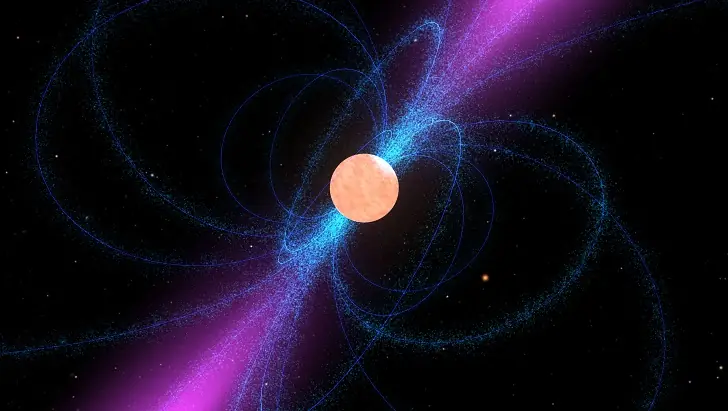
Pulsars, enigmatic celestial objects, are incredibly dense and rapidly spinning neutron stars. Born from the remnants of massive star explosions, a single pulsar can be as small as a city but possess a mass greater than that of the Sun. These exotic objects emit regular pulses of radio waves as they rotate.
This inherent regularity enables researchers to utilize pulsars as reference clocks, akin to the ticking of a grandfather clock, to detect the ripples in space-time caused by gravitational waves.
The Role of Pulsars in Gravitational Wave Detection
Pulsars play a pivotal role in the detection of gravitational waves due to their predictable signal. Variations in the timing of a pulsar’s signal can be precisely measured, making it possible to identify gravitational waves passing through it.
This revolutionary discovery was the result of 15 years of observing dozens of pulsars scattered around the Milky Way. The data collected from these observations led to the groundbreaking detection of gravitational waves in 2015, an achievement that earned the researchers involved the Nobel Prize in Physics.
Supermassive Black Holes and Gravitational Waves
The cataclysmic merger of pairs of supermassive black holes, each weighing millions or even billions of times more than the Sun, produces gravitational waves that ripple through space-time.
Detecting these waves provides invaluable opportunities to study not only the behavior of supermassive black holes but also the evolution of galaxies. To reach us, these incredibly weak gravitational waves must travel millions of light-years, a testament to the vastness of the cosmos and the sensitivity of our detection equipment.
Gravitational Wave Detection Techniques
Gravitational wave observatories, particularly those in the United States, are at the forefront of the quest to detect these subtle waves. These telescopes are equipped to detect the exceedingly low frequency of gravitational waves, which results in gaps in pulsar signals.
Analyzing the data collected from these observatories requires sophisticated techniques, including high-precision measurements and advanced data analysis algorithms. Researchers meticulously search for the characteristic patterns indicative of gravitational waves, helping to unveil some of the universe’s most profound mysteries.
Conclusion
The detection of gravitational waves has been a transformative milestone in the field of astrophysics. Pulsars, with their precise signal timing, have played a critical role in this groundbreaking achievement.
The study of gravitational waves emanating from supermassive black holes has not only enriched our understanding of these enigmatic objects but has also deepened our knowledge of galaxy evolution. Advanced detection techniques deployed in state-of-the-art observatories have proven indispensable in unraveling the secrets of the cosmos.
As scientists continue to explore the universe’s vastness, the discoveries made through gravitational wave detection will remain integral in expanding our understanding of the cosmos and its workings.